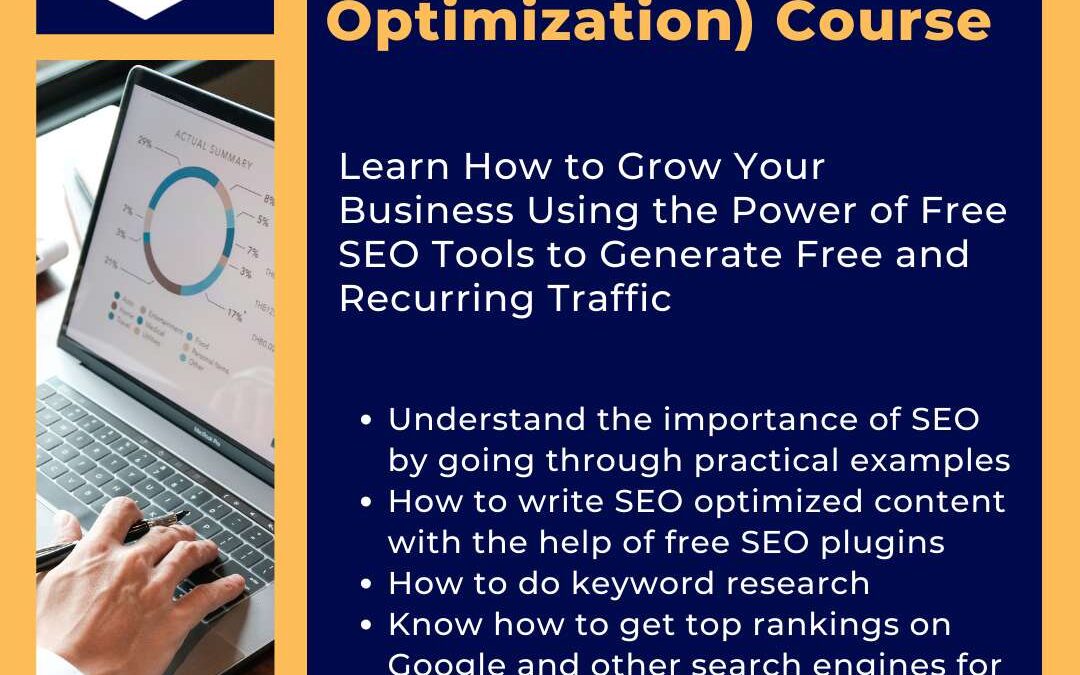
5 Free Tips for Website Search Engine Optimisation
This post is about Search Engine Optimisation for your website.
What is Search Engine Optimisation?
Search Engine Optimisation (SEO) as the process of enhancing a website’s visibility and ranking in search engine results pages (SERPs) through organic, non-paid methods. SEO involves optimising various elements of a website, including its content, structure, and technical aspects, to make it more attractive to search engine algorithms and ultimately improve its chances of being prominently displayed when users search for relevant keywords or phrases.
In short, SEO is like giving your website a makeover to make it more popular on the internet. Imagine your website is a shop on a busy street. You want lots of people to notice your shop and come inside, right? Search Engine Optimisation (SEO) helps with that.
Here’s how it works: When someone searches for something on Google or other search engines, like “best pizza near me”, the search engine looks at all the websites on the internet to find the ones that match what the person is looking for. SEO is about making your website stand out so that it’s more likely to show up at the top of the search results.
To do this, we tweak different parts of your website to make it easier for search engines to understand what it’s about. We choose the right words and phrases (keywords) that people might use when searching for something related to your website. We also make sure your website loads quickly, is easy to navigate, and has other websites linking to it, which tells search engines that your site is trustworthy.
The goal of SEO is to bring more visitors to your website, but not just any visitors – we want people who are genuinely interested in what you offer. By improving your website’s Search Engine Optimisation (SEO), you can attract more of these potential customers, helping your business grow and succeed online.
Benefits of Search Engine Optimisation
SEO, or Search Engine Optimisation, is like a secret sauce for your website. It helps more people find your site online, boosts your credibility, and ultimately grows your business. In simple terms, it’s about making sure your website is easy to find and stands out among the competition. Here’s why Search Engine Optimization (SEO) so important, and you should consider it;
- More People Find Your Website: Think of Search Engine Optimisation (SEO) as a map that helps people find your website in the big online world. By using the right words and tricks, your website becomes easier to spot when someone searches for something related to what you offer.
- Free Traffic: Unlike paying for ads, SEO brings you visitors without you having to spend money on each click. It’s like having a steady stream of customers coming to your shop without you having to pay for billboards or flyers.
- Builds Trust: When your website appears at the top of search results, people tend to trust it more. It’s like being recommended by a friend – they’re more likely to check out your website because it seems reliable.
- Grows Your Business: When more people visit your website, there’s a better chance they’ll buy your products, use your services, or read your content. So, good Search Engine Optimisation (SEO) can help your business grow by bringing in more customers.
- Keeps You Competitive: Everyone’s trying to get noticed online, right? Search Engine Optimisation (SEO) helps you stay ahead of the competition by making sure your website stands out when people are searching for things you offer.
In a nutshell, Search Engine Optimisation (SEO) is like giving your website a boost to attract more visitors, gain trust, and grow your business without spending tons of money on ads. It’s like waving a flag to say, “Hey, come check out my awesome website!”
How to Gain More Visitors with Search Engine Optimisation?
Unlocking the power of Search Engine Optimisation (SEO) to attract more visitors to your website is not rocket science. Here are a few simple yet effective strategies to boost your website’s visibility and drive traffic organically.
1. Keyword Research
What’s a Keyword?
Keywords are the words or phrases that people type into search engines like Google when they’re looking for something online. For example, if someone wants to find a recipe for chocolate cake, they might type “chocolate cake recipe” into Google. “Chocolate cake recipe” is the keyword.
- Start with Brainstorming: Think about what your website is about and what people might search for to find it. Write down all the words and phrases that come to mind.
- Use Keyword Tools: There are tools online (like Google’s Keyword Planner or Ubersuggest) that can help you find more keywords related to your topic. You can type in your initial ideas, and these tools will suggest other keywords that people are actually searching for.
- Check Out Your Competition: Look at what keywords your competitors are using. This can give you ideas for keywords you might have missed.
- Consider Search Intent: Think about what people are really looking for when they type in a keyword. Are they looking for information? Are they trying to buy something? Understanding this can help you choose the right keywords for your content.
- Narrow Down Your List: Once you have a big list of keywords, you’ll want to narrow it down to the most relevant and popular ones. Focus on keywords that have a decent search volume (how many times people are searching for it) but aren’t too competitive (how many other websites are trying to rank for it).
- Organise Your Keywords: Group your keywords into themes or topics. This will help you create targeted content for each group of keywords.
- Keep Testing and Refining: Keyword research is an ongoing process. Keep an eye on how well your chosen keywords are performing and be ready to adjust your strategy if needed.
By following these steps, you can find the best keywords to optimise your website for search engines, making it easier for people to find you online.
2. On-Page Optimisation
On-page optimisation is like fine-tuning your website to make it more attractive to search engines and users. It involves optimising the content and elements on your website’s pages to improve their visibility and relevance in search engine results. Here’re a few steps you can follow to optimise your web pages.
- Keyword Placement: Start by placing your chosen keywords strategically within your content. Put them in your page titles, headings, and throughout your paragraphs. But remember, don’t overdo it. Make sure the keywords flow naturally within your content.
- Optimise Meta Tags: Meta tags, such as meta titles and meta descriptions, provide brief summaries of your page content to search engines. Make sure to include your target keywords in these tags, as they directly impact how your page appears in search results.
- Create High-Quality Content: Content is king when it comes to on-page optimisation. Write engaging, informative, and relevant content that provides value to your audience. Use your keywords naturally within your content, but always prioritise creating content that resonates with your readers.
- Optimise Images: Images play a crucial role in on-page optimisation. Use descriptive filenames and include alt text that includes your target keywords. This helps search engines understand what your images are about and can improve your chances of appearing in image search results.
- Internal Linking: Internal linking involves linking to other pages within your website. This helps search engines crawl and index your site more effectively, and it also helps users navigate your website easily. Be strategic with your internal links, using relevant anchor text that includes your keywords.
- Improve Page Speed: Page speed is a crucial factor for both user experience and search engine rankings. Optimise your website’s loading speed by compressing images, minifying CSS and JavaScript files, and using caching techniques. A faster website not only improves user satisfaction but also boosts your Search Engine Optimisation (SEO) performance.
- Mobile Optimisation: With more people accessing the internet via mobile devices, optimising your website for mobile is essential. Ensure your website is responsive and provides a seamless user experience across all devices. Mobile-friendly websites tend to rank higher in mobile search results.
By following these steps, you can effectively optimise your website’s on-page elements to improve its visibility, relevance, and user experience, ultimately boosting your SEO performance.
3. Website Speed
Website speed refers to how fast your website loads and responds when someone tries to access it. It’s crucial for user experience and can also impact your SEO performance. Search engines like Google prefer to rank faster websites higher in search results because they provide a better experience for users. Follow the following steps to enhance your website speed;
- Test Your Website Speed: Start by testing your website’s speed using tools like Google’s PageSpeed Insights, GTmetrix, or Pingdom. These tools will give you insights into your website’s current performance and highlight areas for improvement.
- Optimise Images: Images often contribute to slow website speeds. Compress your images to reduce their file size without sacrificing quality. You can use online tools or plugins to optimise images before uploading them to your website.
- Minimise HTTP Requests: Each element on your web page, such as images, scripts, and stylesheets, requires an HTTP request to load. Minimise the number of these requests by combining CSS and JavaScript files, and using CSS sprites to combine multiple images into a single file.
- Enable Browser Caching: Browser caching allows browsers to store certain elements of your website, such as images and scripts, locally on a user’s device. This reduces the need for the browser to download these elements every time someone visits your website, resulting in faster load times for returning visitors.
- Use Content Delivery Networks (CDNs): Content Delivery Networks distribute your website’s content across multiple servers worldwide. When someone accesses your website, the CDN serves content from the server closest to them, reducing latency and improving load times.
- Minify CSS, JavaScript, and HTML: Minification involves removing unnecessary characters, such as whitespace and comments, from your CSS, JavaScript, and HTML files. This reduces file sizes and speeds up the loading of your web pages.
- Optimise Server Response Time: Server response time refers to the amount of time it takes for your web server to respond to a request from a browser. To improve server response time, consider upgrading your hosting plan, optimising your website’s code, and reducing the number of plugins or third-party scripts.
- Monitor and Maintain: Website speed optimisation is an ongoing process. Regularly monitor your website’s performance using tools like Google Analytics and PageSpeed Insights. Address any issues that arise and continue to implement best practices for maintaining fast load times.
- By following these steps, you can optimise your website’s speed to enhance user experience and improve your SEO performance, ultimately leading to higher rankings in search engine results.
4. Quality Content Creation
Understanding Quality Content: By the following steps, you can create quality content that resonates with your audience, attracts organic traffic, and improves your website’s SEO performance over time. Remember, the key is to prioritise your audience’s needs and interests while incorporating SEO best practices into your content creation process.
Quality content is like a magnet that attracts visitors to your website. It’s not just about stuffing keywords; it’s about creating valuable, relevant, and engaging content that meets the needs of your audience.
- Know Your Audience: Start by understanding who your target audience is and what they’re interested in. What questions are they asking? What problems are they trying to solve? Tailor your content to address their needs and interests.
- Keyword Research: Conduct keyword research to identify the terms and phrases your audience is using to search for information related to your industry or niche. Use tools like Google Keyword Planner or Ubersuggest to find relevant keywords with decent search volume and manageable competition.
- Create Compelling Titles and Headlines: Craft attention-grabbing titles and headlines that entice users to click and read your content. Include your target keywords naturally within your titles to improve SEO.
- Provide Value and Solutions: Focus on providing valuable information, insights, and solutions to your audience’s problems. Your content should be informative, educational, entertaining, or inspirational, depending on your audience’s preferences and needs.
- Use Clear and Concise Language: Write in a clear, concise, and conversational tone that’s easy for your audience to understand. Avoid jargon or overly technical language unless your audience is familiar with it.
- Optimise Content Structure: Organise your content into logical sections with descriptive headings and subheadings. Use bullet points, numbered lists, and paragraphs to break up large blocks of text and make your content easier to read.
- Incorporate Visual Elements: Enhance your content with relevant images, videos, infographics, or other visual elements. Visuals not only make your content more engaging but also improve its share-ability and SEO.
- Internal and External Linking: Incorporate internal links to other relevant pages or posts on your website to help users navigate and explore more of your content. Additionally, include authoritative external links to credible sources to provide additional context and credibility to your content.
- Regularly Update and Refresh Content: Keep your content fresh and up-to-date by regularly updating and refreshing it with new information, insights, or statistics. This not only keeps your audience engaged but also signals to search engines that your website is active and relevant.
5. Building Backlinks
Backlinks are like ‘upvotes’ for your website. They’re links from other websites that point back to your site. Search engines see backlinks as votes of confidence – the more quality backlinks you have, the more trustworthy and authoritative your website appears.
- Identify Link Opportunities: Start by identifying websites in your niche or industry that could potentially link back to your content. Look for blogs, forums, industry directories, or websites that mention topics related to your website.
- Create High-Quality Content: Before reaching out for backlinks, create high-quality, valuable content that others will want to link to. This could be informative articles, helpful guides, infographics, or research studies – something that offers unique value to your audience.
- Competitor Research: Analyse your competitors’ backlink profiles to see where they’re getting their links from. This can give you insights into potential link opportunities for your own website.
- Outreach and Networking: Reach out to website owners, bloggers, influencers, or journalists who might be interested in your content. Personalise your outreach emails and explain why linking to your content would be valuable to their audience.
- Guest Blogging: Offer to write guest posts for other websites in your niche. Include a link back to your website within the guest post or in your author bio. Guest blogging not only helps you gain backlinks but also exposes your content to a wider audience.
- Broken Link Building: Identify websites in your niche that have broken links (links that no longer work). Reach out to the website owner, politely inform them about the broken link, and suggest replacing it with a link to relevant content on your website.
- Utilise Social Media: Share your content on social media platforms to increase its visibility and encourage others to link back to it. Engage with your audience and build relationships with influencers in your industry who may share your content with their followers.
- Monitor and Maintain: Keep track of your backlink profile using tools like Google Search Console or Ahrefs. Monitor new backlinks as they appear and regularly check for any broken or toxic links that may harm your website’s Search Engine Optimisation (SEO) performance. Disavow any spammy or low-quality backlinks to maintain a healthy link profile.
By following these steps, you can build quality backlinks that improve your website’s authority, visibility, and Search Engine Optimisation (SEO) rankings over time. Remember, focus on quality over quantity, and always prioritise creating valuable content that others will naturally want to link to.
Conclusion
Search Engine Optimisation (SEO) is the key to transforming your website into a powerful magnet for attracting visitors. By implementing strategies like keyword research, on-page optimisation, quality content creation, and building backlinks, you can significantly improve your website’s visibility and authority in search engine rankings. Remember, Search Engine Optimisation (SEO) requires dedication and adaptability. Keep refining your strategies to stay ahead of the competition and achieve long-term success online. Embrace the power of Search Engine Optimisation (SEO) to reach more people, increase sales, attract clients, or share valuable content with the world.